Celebrating the Success of the 2nd International Summer School on LLM-Based Agents for Software Engineering
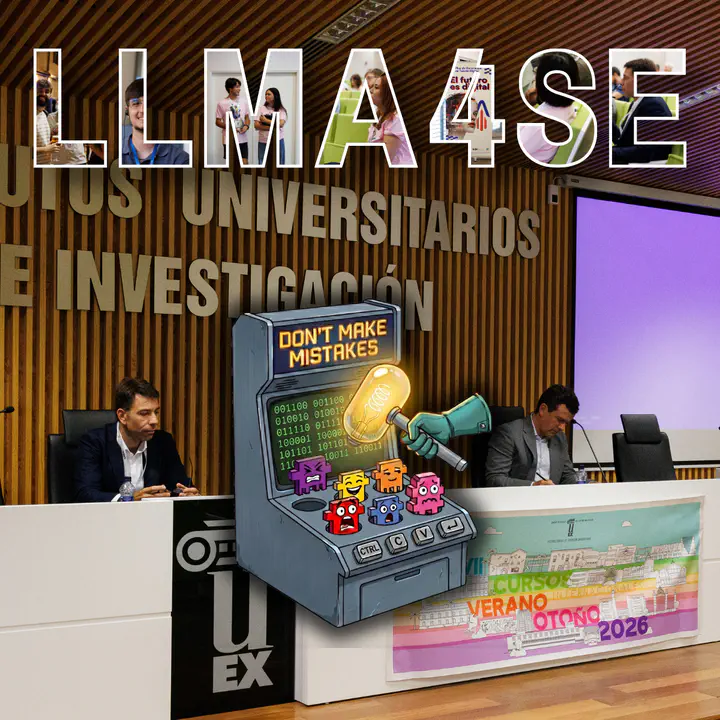
From 9 to 11 September 2026, the Instituto Universitario de Tecnologías Informáticas Aplicadas and the i3 lab, with the support of the University of Extremadura, organized the 2nd International Summer School on LLM-Based Agents for Software Engineering (LLMA4SE). The event brought together researchers, professionals, and students from academia and industry to explore the rapidly evolving field of LLM-based multi-agent systems and their applications in software engineering.
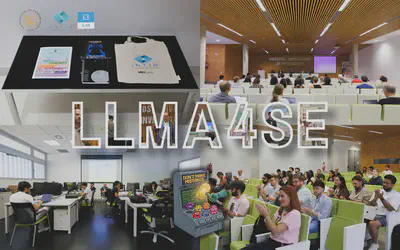
On the opening day, we enjoyed three highly engaging talks:
- Juan de Lara opened the Summer School with his talk, “When Models Met Agents: Reconciling Two Approaches to Automated Software Development”.
- He was followed by Giovanni Rosa, who presented “Governing Code with Specification-Driven Development”.
- To round off the morning, Antonio Mastropaolo presented “Measuring a Moving Target: Benchmarking Non-Deterministic Software Engineering”.
After lunch, participants attended the hands-on workshop “Specification-Driven Development”, led by Gregorio Robles. This was followed by the second part of Antonio Mastropaolo’s session, “Measuring a Moving Target: Benchmarking Non-Deterministic Software Engineering Agents”.
The day concluded with a fantastic guided tour of the Old Town of Cáceres, a UNESCO World Heritage Site. To learn more about the first day of the Summer School, visit our previous post.
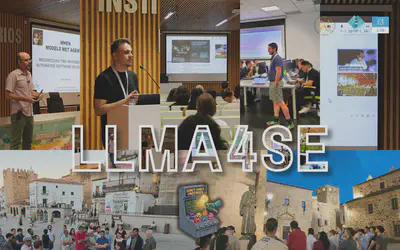
The second day continued with the following excellent talks:
- Cristina Improta presented “Human vs. AI Code: Understanding Systematic Differences and Their Root Causes”.
- After a short break, José Luis Redondo delivered “From Retrieval to Reason & Action: Building Language-Steerable Discovery Systems at Spotify”.
- To wrap things up, Priyansh Trivedi presented “Beyond Pass Rates: Does Clean Code Matter for Coding Agents?”.
The afternoon was devoted to the hands-on workshop “Benchmarking the Quality of AI-Generated Code”, led by Pietro Liguori. Later, the social programme included a guided cultural tour of the Helga de Alvear Museum of Contemporary Art, followed by a gala dinner at Casa Palacchio Restaurant. To learn more about the second day of the Summer School, visit our previous post.
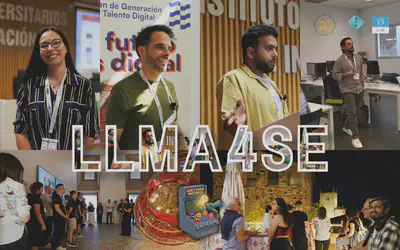
The third and final day featured the following talks:
- Carlos García-Martínez first presented the theoretical foundations of his talk on “Task-Oriented Conversational Agents” and then led a short hands-on workshop on developing task-oriented conversational agents.
- Phu Nguyen then presented his work on “Assurance-Driven Security Engineering and the Roles of LLM-Based Agents”.
The day—and the Summer School—concluded with the hands-on workshop “Building Cooperative LLM Agent Workflows for Anti-Pattern Detection, Code Smell and Technical Debt Resolution”, led by Karthik Shivashankar and Adela Nedisan Videsjorden. To learn more about the third day of the Summer School, visit our previous post.
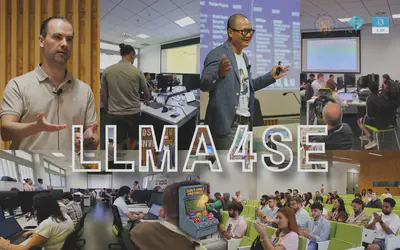
We would not claim that everything went perfectly—live events always come with a few glitches—but, judging by the attendees’ satisfied faces and enthusiastic messages, we can proudly say that LLMA4SE 2026 was a resounding success. Now that we have brought this second edition to a close, we are already working on the next one to ensure that the third edition of our Summer School is just as engaging and enriching as its predecessors. Our aim is to maintain the high quality of the content and the wide range of discussions while continuing to consolidate this valuable meeting point for the community.
We would like to thank all the attendees, speakers, and participants for their enthusiasm and active involvement. Your presence and contributions were essential to the success of the Summer School. We would also like to thank the sponsors and partners who made the event possible, including the University of Extremadura, the catering team, and the camera crew.
Special thanks go to all the i3 lab team members who helped organize the Summer School. Their hard work and dedication made the event possible. From the Summer School directors, José María Conejero Manzano and Roberto Rodríguez Echeverría, to the team members who supported the logistics, coordination, and care of our participants, everyone contributed in one way or another to creating such a welcoming and stimulating environment for learning and collaboration.
Thank you all!
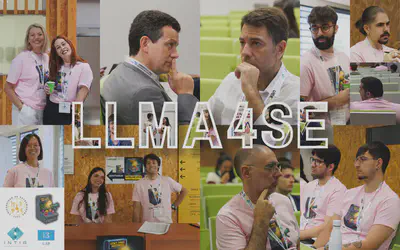
Are you interested in our research areas, would you like to learn more about our projects, or are you considering collaborating with us? Get in touch with our team!
Stay tuned for our upcoming announcements!

Roberto Rodriguez-Echeverria
Associate Professor
Associate Professor at Universidad de Extremadura. Deep learner, MTB rider and father of 2.

José M. Conejero
Associate Professor
Assistant Professor at Universidad de Extremadura. My research interests include Model-Driven Development, Data Science, Machine Learning.

Sara Guillén Torrado
IT Support Technician
Software engineer and researcher at Universidad de Extremadura (UEx)