SISTEDES 2026 Alicante Conference

From June 16 to 18, Roberto, Juan Diego (Andy), Emilio, and Javier attended the SISTEDES 2026 Conference in Alicante, held between the Aula de Cultura of the Fundación Mediterráneo and the Sede Universitaria Ciudad de Alicante. The event brought together the software engineering community around several tracks, with a special interest for us in AI4SE.
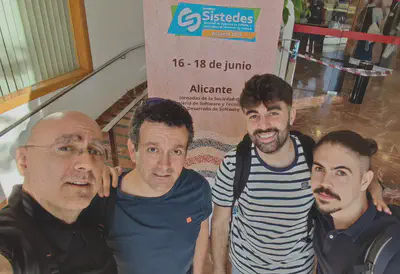
Our participation began on Tuesday, the 16th, with the session dedicated to automatic improvement and repair. There, we presented the short paper Quality Assessment of Agentic AI Processes in Software Development Life Cycle, focused on the evaluation and comparison of traces generated by agentic processes in software development. By evaluating the agent’s reasoning traces, the correctness of the process can be formally verified, ensuring it meets the established quality requirements.
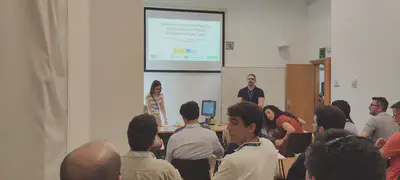
That same day, we attended other sessions that, as a whole, provided a good overview of the current state of research in automation, static analysis, and the use of LLMs for maintenance and validation tasks.
Tuesday’s keynote was delivered by Nuria Oliver, with an intervention focused on the role of AI in society, its opportunities, and its limits, through the lens of the ELLIS Alicante’s work. It was a clear and useful talk that raised important questions about AI biases and limitations from a more human perspective.
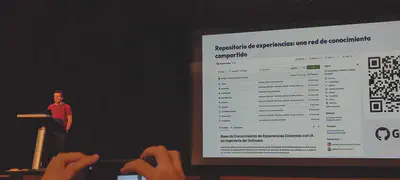
Wednesday, the 17th, concentrated several of the most relevant interventions. Jordi Cabot’s keynote on BESSER took place, a proposal aimed at accelerating software development through modeling and AI collaboration. It was a particularly interesting presentation due to how it combines model-driven engineering, automation, and generative tools. Following this, Roberto collaborated on the presentation of the Commission for Teaching Innovation in Software Development Education in the Era of Generative AI, which addressed the impact of generative tools on university teaching. The main proposal of this talk was to gather different teaching innovation experiences with generative tools into a common repository, so that it serves as a reference for other teachers and facilitates collaboration among them.
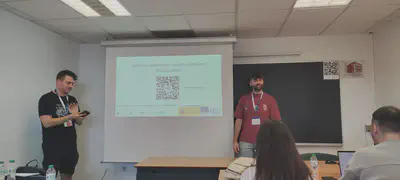
Later that same afternoon, Emilio presented Beyond Functional Code: Quality Specifications for LLM-based Agents, a proposal focused on separating functional specifications from quality ones so that the latter can be reused independently of the technological stack. The idea relies on a workflow that converts information obtained from static analysis tools into reusable quality specifications, aiming to reduce technical debt and advance toward a model applicable to different software systems.
Thursday, the 18th, closed the conference with a keynote by Verónica Dahl, a Prolog pioneer, who offered a historical and technical look at logic programming and some of its most interesting formal developments, as well as its use in teaching younger students.
The closing session on the final day was particularly relevant to us, as Juan Manuel Murillo, coordinator of our research group (Quercus-SEG), was unanimously appointed as the new president of the society. We are all looking forward to this new chapter for SISTEDES.
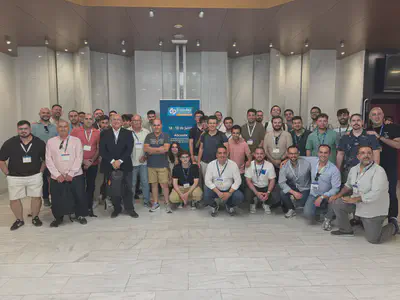
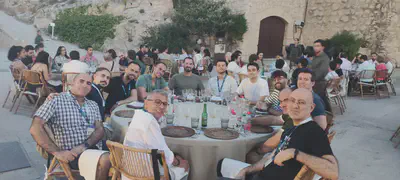
Social activities played a secondary role but allowed us to converse with other researchers and strengthen contacts. In any case, the main value of the trip lay in the quality of the presentations and the ideas that emerged to continue working.
Conclusions
SISTEDES 2026 was particularly useful for situating our work within the context of current research and for learning firsthand about advancements in the use of LLMs and other AI techniques in software engineering. Interacting with other researchers and being exposed to different approaches provided us with new perspectives and opportunities for collaboration.
If you’d like to learn more about our research lines in applying AI to software engineering, feel free to get in touch with us and we’ll share more details.
Roberto Rodriguez-Echeverria
Associate Professor
Associate Professor at Universidad de Extremadura. Deep learner, MTB rider and father of 2.

Juan D. Gutiérrez
Assistant Professor
Assistant Professor at Universidad de Extremadura. I enjoy computing but, above all, learning new things.

Emilio Delgado
Researcher